

Introduction: Why Multiplication Facts Deserve Special Attention
Multiplication is one of the biggest turning points in elementary math. Once children move past basic addition, they are asked to remember dozens of facts, and many begin to feel that math is getting harder. Teachers and parents often search for a trusted place to practice, and multiplication.com is one of the best-known answers to that search.
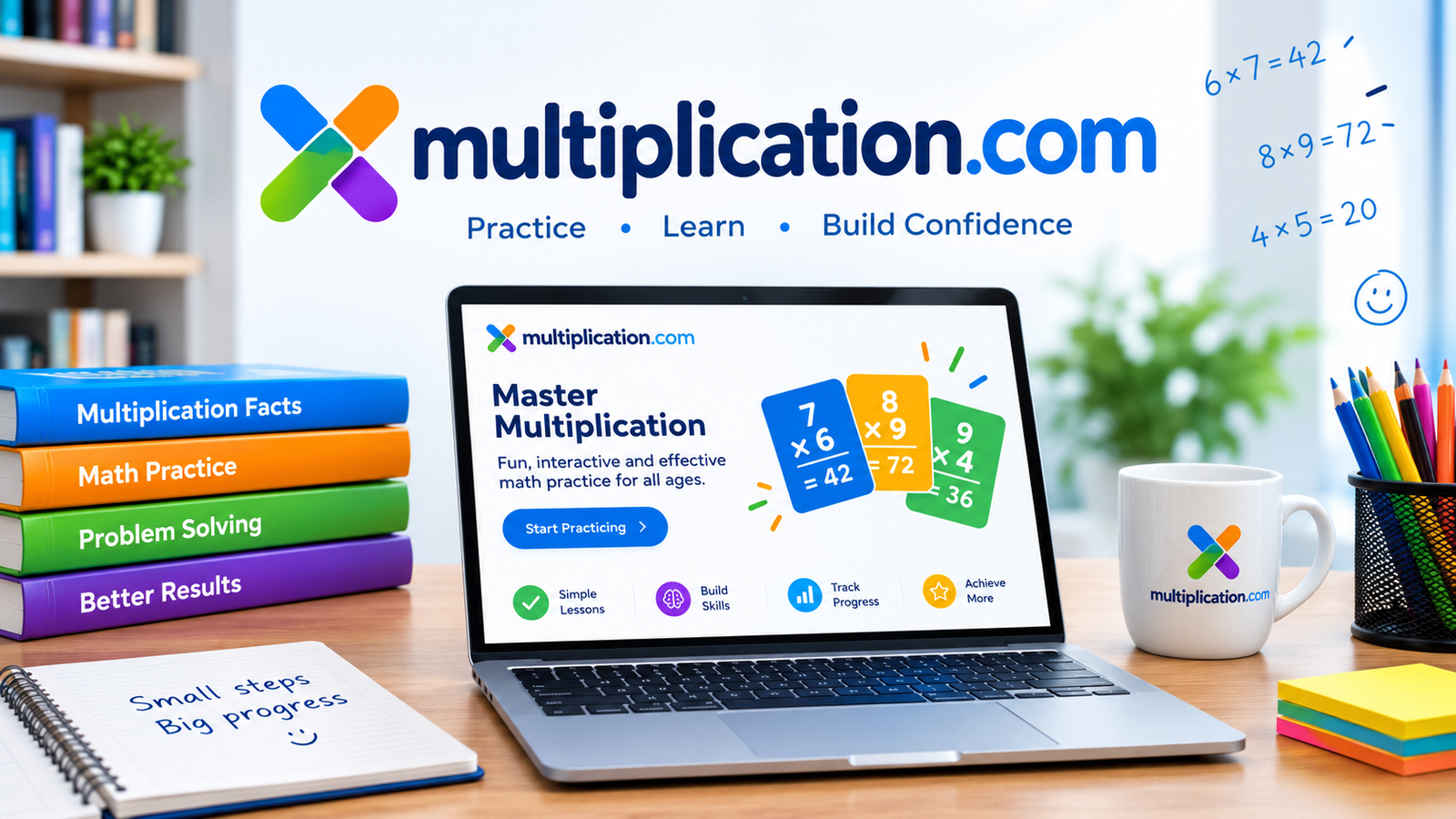
The site is built around a single goal, which is helping students learn the multiplication facts. Its homepage describes this as “kind of our thing,” and that focus shows in everything it offers, from free multiplication games and auto-scored quizzes to flashcards and printable worksheets. This article explains what the site provides, how each part works, and how families and classrooms can use it well.
What Multiplication.com Is and Who Is Behind It
Multiplication.com is a free educational website for learning times tables and multiplication facts. It is part of IXL Learning, the education company that also runs other well-known learning sites, and the footer of the site carries the IXL Learning copyright for 2026. Being connected to an established education company gives parents and teachers a reasonable level of confidence about who stands behind the content.
The site is organized into three main areas that you can reach from the top menu. These are Games, Learning, and Teachers and Parents. Below those, the site also links to worksheets, flashcards, help pages, a privacy policy, and a customer service page, which makes it easy to find support if something does not work as expected.
Learning Through Step-by-Step Lessons
The Learning section is where the site explains how multiplication actually works, instead of asking children to memorize answers with no context. The homepage describes its approach as step-by-step instruction, and the “Get Started Today” button leads straight into a lesson on understanding the facts. This matters because a child who understands that 4 times 6 means four groups of six is far less likely to forget the answer under pressure.
Good multiplication instruction usually moves from meaning to patterns and then to speed. A child first learns what multiplication represents, then notices patterns such as the way the fives end in zero or five, and finally practices until recall becomes automatic. Following that order, rather than jumping straight to timed drills, helps students feel capable rather than anxious.
Free Multiplication Games That Keep Kids Engaged
The games are the part of the site that children usually remember. The homepage highlights titles such as Car Rush, a racing game with multiple worlds and levels where players practice math facts while steering their way through the track. The site also offers addition games, so younger learners can build a foundation before moving up to times tables.
Games work well for practice because they turn repetition into something children want to do. A student who would resist a page of twenty problems may happily answer the same number of questions to win a race. The site itself notes that studies show games can be an effective way to learn, and many teachers have seen that firsthand when a quiet practice period becomes a lively one.
Auto-Scored Quizzes and Activities That Adapt
Quizzes on multiplication.com are scored automatically, so students get quick feedback without waiting for an adult to check their work. Immediate feedback is valuable in math, because a wrong answer corrected right away is much less likely to turn into a habit. It also saves teachers and parents time, which is a real benefit during a busy school week.
The site also explains that its quizzes, games, and other tools adjust to meet each student where they are. In simple terms, the activities aim to avoid being too easy or too hard, which helps prevent frustration. A child who is still working on the threes should not be thrown into the twelves, and a child who has mastered the easy facts should not be stuck repeating them.
Flashcards and Worksheets for Hands-On Practice
Not every practice session needs a screen. Multiplication.com offers printable worksheets and free multiplication flashcards, which are handy for homework, car rides, or quiet moments at home. Writing out a fact by hand uses a different kind of memory than tapping an answer on a device, and that variety strengthens learning.
Flashcards are especially useful for sorting facts into the ones a child knows and the ones that still need work. A parent can shuffle a small stack, set aside the cards that were answered quickly, and keep practicing the rest. Seeing the “still learning” pile get smaller from week to week gives a child proof of progress, which is a powerful motivator.
How Teachers and Parents Can Use the Site
The Teachers and Parents section is meant for the adults who guide the learning. Teachers can use games as a center activity, quizzes as a quick check of understanding, and worksheets as supplementary classroom material. Because the content is focused on one topic, it fits easily alongside whatever textbook or curriculum a school already uses.
Parents and homeschool families can use the site in a similar way. A simple routine works best, such as ten to fifteen minutes a day with one or two number families, followed by a short conversation about what felt easy and what felt tricky. Small, regular sessions help far more than long, tiring ones, and they keep math from becoming a source of stress at home.
Practical Tips for Mastering the Times Tables
Start with the facts that are easiest to learn, such as the twos, fives, and tens, and build confidence before moving to the sevens, eights, and nines. Teach children that multiplication works in either order, so 3 times 7 and 7 times 3 give the same answer. This simple idea reduces the number of facts to learn by a large amount and often comes as a happy surprise.
Mix different kinds of practice during the week. A game on one day, a short quiz on another, and a flashcard session on a third gives the brain several ways to meet the same fact. Praise effort and improvement instead of speed alone, because a relaxed learner remembers more than a rushed one.
Using the Site Safely and Wisely
Whenever children use a website, it is wise for an adult to stay nearby, at least at first. Take a moment to read the site’s privacy policy and terms of service, both of which are linked at the bottom of every page, and avoid sharing personal details. The site also has help pages for navigating the site and for playing games, which are useful if a child gets stuck.
Balance matters too. Online practice is most helpful when it is one part of a varied routine that includes reading, outdoor play, and hands-on math using everyday objects like coins, blocks, or snacks. Keeping sessions short and purposeful helps the site stay a useful tool rather than just another screen habit.
Conclusion: A Focused Place to Build Math Confidence
Multiplication.com offers a clear and simple path for learning the multiplication facts. With step-by-step lessons, free games, auto-scored quizzes, flashcards, and worksheets, it covers the main ways children learn and gives adults the tools to support them. Its link to IXL Learning and its focus on one skill add to its trustworthiness.
The best results come from patience and regular practice. Start with a few facts, celebrate each bit of progress, and keep sessions short and positive. Over time, those small daily efforts build the speed, accuracy, and confidence that students carry into fractions, division, and every stage of math that follows.
