

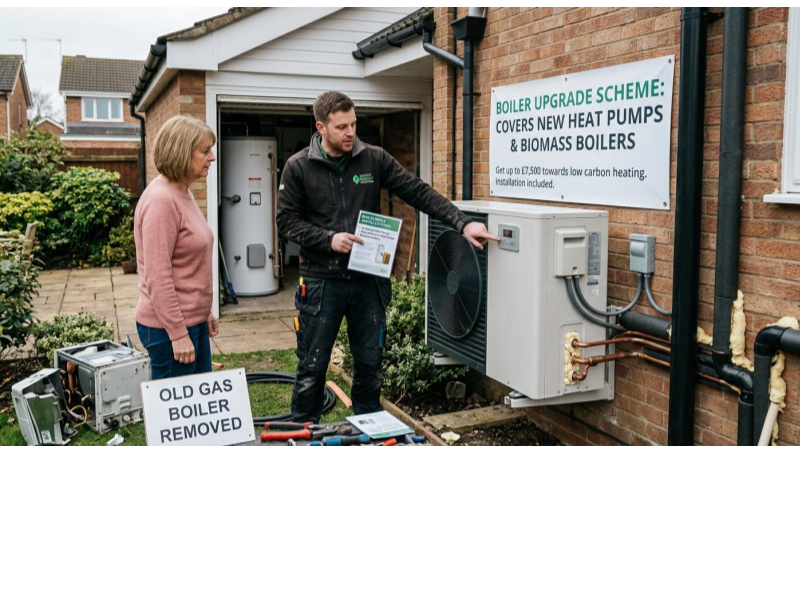
In short, it pays a fixed sum toward replacing fossil fuel heating with a low-carbon system in England and Wales. Most heat pumps get £7,500, some off-grid oil and LPG homes get £9,000, biomass boilers get £5,000, and air-to-air units get £2,500. You don’t apply yourself: your installer claims the money and takes it off the invoice.
The boiler upgrade scheme rarely pays the whole bill, though, so the real question is how much of your quote it absorbs and which costs stay with you. The sections below answer that system by system.
How Much Is Each Grant Worth?
The scheme changed more in 2026 than in any year since it launched. This year’s budget rose to £400 million and the scheme was extended to March 2030. Here are the current tiers:
| System | Grant |
| Air source heat pump | £7,500 |
| Ground or water source heat pump | £7,500 |
| Air or ground source, replacing oil or LPG off the gas grid | £9,000 (until 31 March 2027) |
| Air-to-air heat pump | £2,500 |
| Biomass boiler (rural homes only) | £5,000 |
| Hybrid heat pump with gas boiler | Not eligible |
The £9,000 rate is the one to watch if you heat with oil. It applies until 31 March 2027 to homes heated by oil or LPG with no mains gas connection. Officials describe it as a temporary uplift, so timing matters.
Does The Grant Pay For The Full Installation or Just The Heat Pump?
People often assume the grant pays for the heat pump unit alone. It doesn’t work that way. The money counts against the whole installation, so the outdoor unit, hot water cylinder, pipework, labour and commissioning all sit in one quote. The cylinder has no separate grant but counts as part of the heat pump install.
This catches buyers out. Two installers can claim the same £7,500 yet leave you with bills thousands of pounds apart, because everything above the grant comes from your pocket. Radiators make the biggest difference. Heat pumps run at lower temperatures than gas boilers, so older homes often need some radiators replaced with larger ones. One quote might include that work, while another leaves it out to look cheaper.
So ask every installer for an itemised breakdown and compare the final price after the grant, not the headline cost.
Heat pump installs also carry 0% VAT until March 2027, which lowers the amount you pay on top of the grant.
Which Heating Systems Qualify?
Air source heat pumps draw warmth from outside air and feed radiators or underfloor heating, plus your hot water. Most applications fall into this category.
Ground source systems collect heat through buried pipes or a borehole. They cost more to install, yet they receive the same £7,500, so the grant covers a smaller share of the bill.
Air-to-air units are newer to the scheme. They earn £2,500 and became eligible from April 2026, but they heat rooms only and don’t provide hot water. If you pick one, you’ll need a separate plan for your taps and shower.
Biomass boilers suit a narrow group. They require a rural location and an emissions certificate.
What Won’t The Scheme Pay For?
Some exclusions surprise people, so check these before booking a survey:
- Hybrid setups. Keeping your gas boiler as backup alongside a heat pump rules you out.
- New builds. Developers can’t claim, although self-builders usually can.
- Social housing. Homes owned by councils or housing associations fall outside the scheme.
- A second claim. Each property gets one grant.
- Insulation. Loft and wall upgrades need other funding. Some households get free insulation through ECO4 first, then apply for the heat pump grant.
- Very large systems. Capacity above 45kW sits outside the standard rules.
Who Can Apply?
Boiler upgrade scheme eligibility depends on four basics. You must own the property, it must be in England or Wales, and you must be replacing an existing fossil fuel heating system. Landlords and small business owners count as owners too. Homes with direct electric heating can also qualify, even if the old heaters still work.
The fourth requirement involves your installer. An MCS-certified installer must apply on your behalf. You never fill in a form yourself, and the grant goes to the installer, who removes it from your invoice.
Income plays no part. The scheme pays a fixed grant to almost any homeowner, whatever they earn. That sets it apart from most energy support, which usually targets low-income households.
There’s one requirement to confirm directly. Older rules required a valid Energy Performance Certificate, and some 2026 guides report that the EPC condition has been removed, while others still list it. Ask your installer what Ofgem currently requires before you commission a new certificate.
