

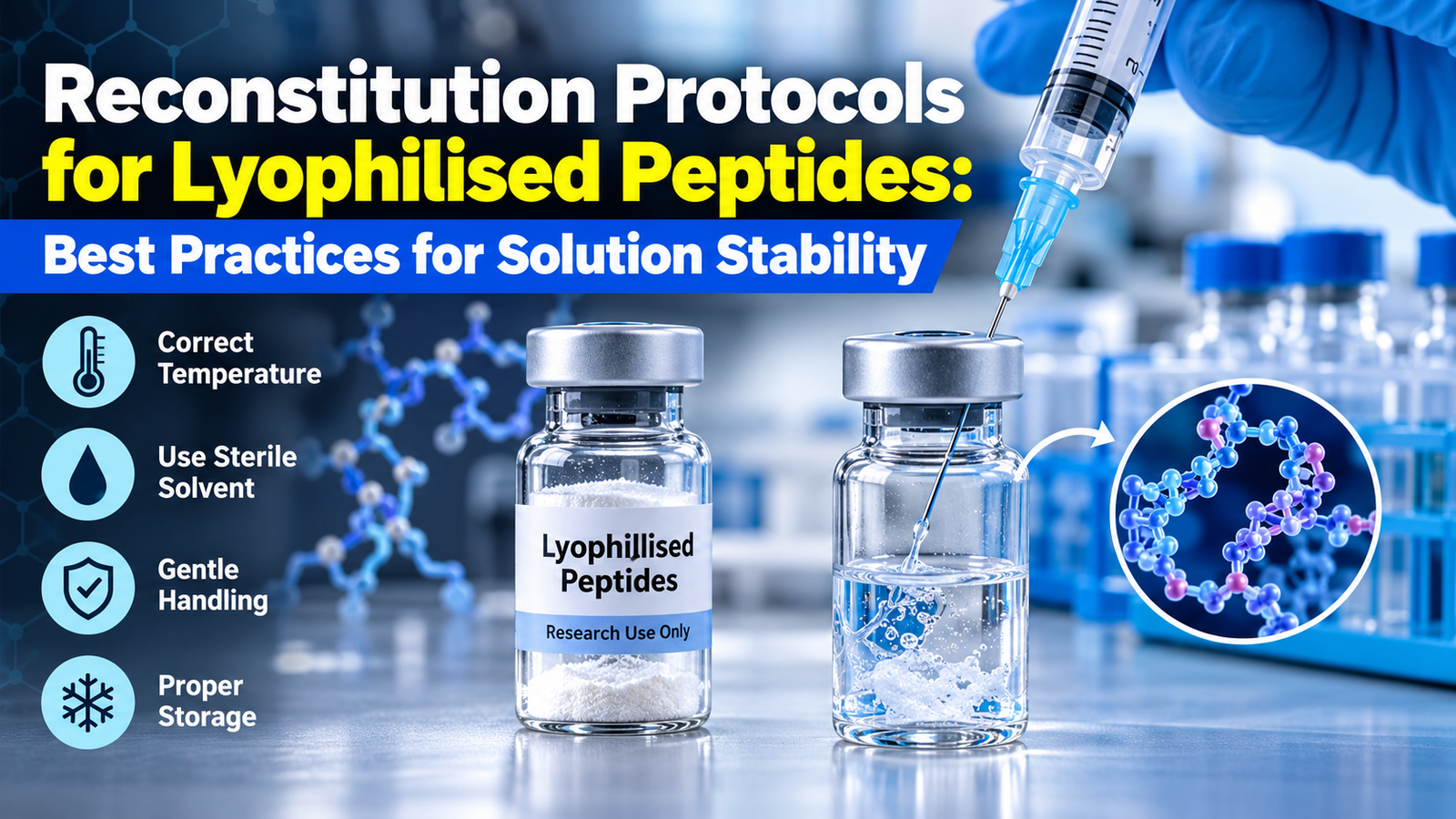
Lyophilized peptides are crucial to the biochemistry field. The lyophilized peptides are the dry powder form which is used as a protective measure for the sensitive chemical substances from destruction during shipment and storage. To get the most out of lyophilized peptides, they need to be dissolved in water.
When working with synthetic secretagogues such as special Ipamorelin UK peptides, a lot of caution should be observed. This is to keep the molecules in good shape. It is key to keep pH levels right and make sure the area is very clean when you are getting them set up. Doing these simple things will help these receptor agonists stay safe and work well in the lab.
The Chemistry of Lyophilisation and Solubilisation
Lyophilisation removes water by changing it into gas with no air around. This keeps the peptide chain safe in a strong mix. At this step, it can stay in good shape even at room temperature. But when you make it a liquid again, it can get weak and react to things in the air.
[ Lyophilised Cake ] —> It stays stable at -20°C.
|
(Solvent Introduced) —> Direct flow breaks delicate chains
|
[ Reconstituted Solution ] —> Weak; gets damaged by heat & stress
Factors that Influence Solubilization Efficiency
- Compatibility with Solvent: Pure solvents maintain the proper ion ratio. They do not alter the natural charge of the peptide.
- pH Balance: Mild or slightly acidic solvents prevent degradation by basic solvents and precipitation.
- Mechanical GENTLE Handling: If you use GENTLE actions, then you will prevent disruption of weak hydrogen bonds.
Protocol for Reconstituting Peptide
- Thermal Equilibration: Take the vial out of cold storage. It can be either -20 degrees Celsius or -80 degrees Celsius. Place the vial aside until it reaches room temperature, which is between 20 and 25 degrees Celsius. This should be done before opening the vial. This is because opening the vial while it is still cold will allow moisture from the air to enter the powder. It will cause the breakdown of the powder.
- Sterile Surface Preparation: Wipe the rubber tops of the peptide vial and the container with 70% isopropyl wipes. Let it dry fully so there are no wet spots left. This will keep out other chemicals from mixing.
- Solvent Injection: Select a clean and safe liquid to mix with your solution. Bacteriostatic water that contains 0.9% benzyl alcohol may be used for various purposes. Alternatively, you may use clean 0.9% saline solution.
- Addition Slowly: Tilt the vial to an angle of 45 degrees. Allow the solution to move across the glass surface. The speed should not be too fast.
Standards for Storage and Stability
Upon mixing the powder and the liquid, the peptide needs to be stored correctly. This will increase its shelf life.
| Physical Form | Storage Temperature | Estimated Shelf Life | Storage Conditions |
| Lyophilised Powder | -20°C to -80°C | 12–24 Months | Keep sealed, dry, and protected from light. |
| Reconstituted Solution | 2°C to 8°C (Refrigerated) | 3–4 Weeks | Avoid room temperature; store upright in dark conditions. |
| Aliquoted Solution | -20°C or -80°C (Frozen) | 3–6 Months | Single-use aliquots; strictly avoid repeat freeze-thaw cycles. |
Prevention of Freeze-Thaw Injury
Multiple cycles of freeze-thaw will result in the development of ice crystals that will cause breakdown of the peptide bonds and cause aggregation of the proteins. If the reconstituted protein is not expected to be used up within a period of three to four weeks, then the protein should be aliquoted in single use microcentrifuge tubes and then stored at -80°C.
Quality Control and Analysis Verification
Analytical testing makes sure that the mixed-up preparations are good and match lab standards. This has to be done before beginning the experiment.
- Reverse Phase High Performance Liquid Chromatography (RP-HPLC): It takes into account the purity of the chemical. Identifies the decomposition products based on how long the chemical stays in the body.
- Mass Spectroscopy (MS): Corrects the molecular weight. It makes sure the structure is pure in all batches.
Conclusion
Getting good at peptide reconstitution is key to keeping it safe. It also helps you get the right results in the lab. You should watch the temperature and use clean solvents. Do not mix with strong force. Do not freeze and thaw your samples again and again. This helps keep the structure of these man-made molecules in good shape.
When you use special research compounds like Ipamorelin UK peptides, there are some steps you should take. This will help you get good and steady results each time you do a test.
