

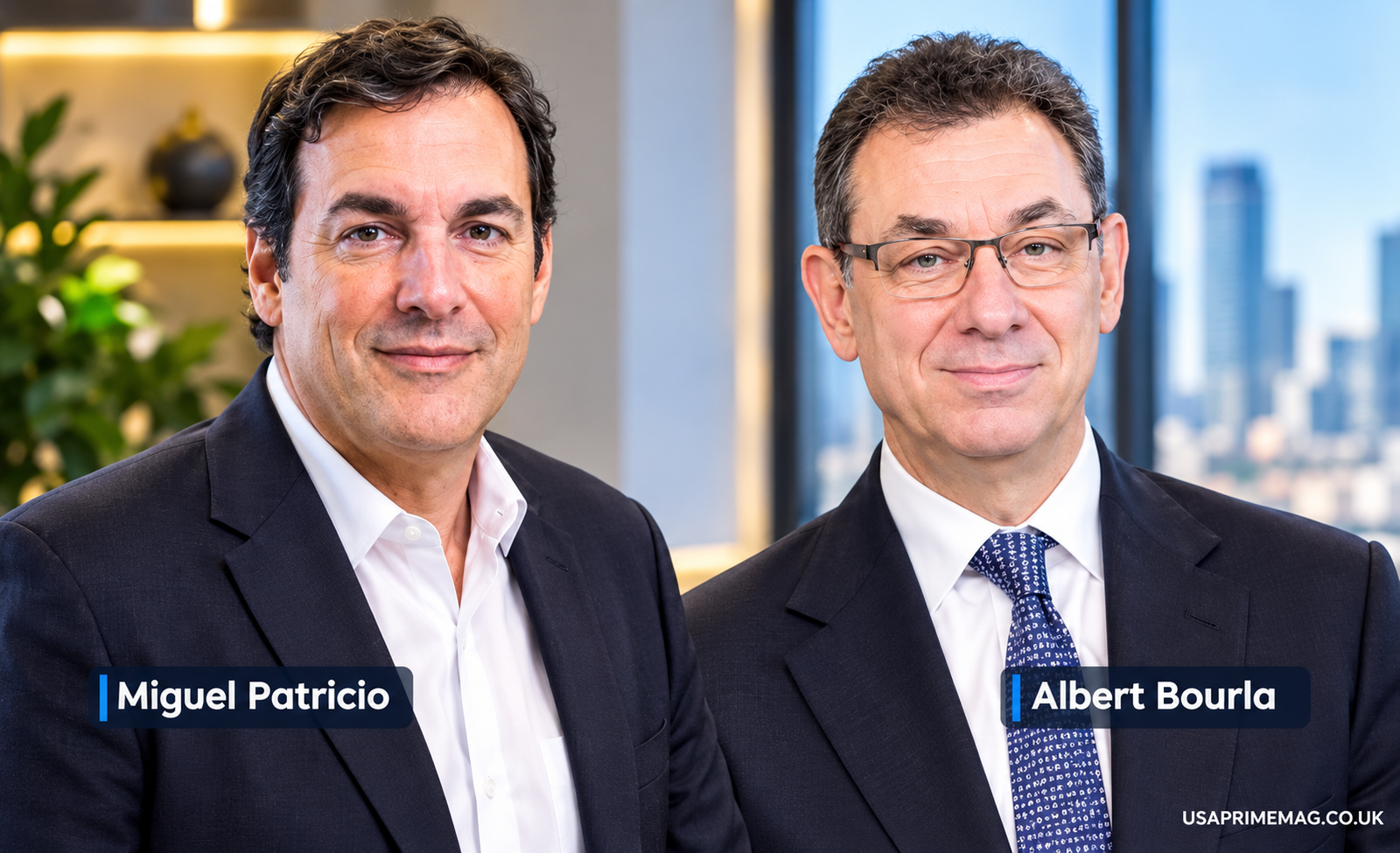
Miguel Patricio and Albert Bourla are two business leaders who are often searched together, even though they come from very different industries. Patricio spent his career in marketing, beer and packaged food, and became the chief executive of Kraft Heinz. Bourla began as a veterinarian and rose to lead Pfizer, one of the biggest drug companies in the world. This article explains who they are, how their careers developed and what readers can learn from their leadership. It also covers related topics such as Kraft Heinz strategy, the Pfizer COVID-19 vaccine, brand building and pharmaceutical innovation.
Who Is Miguel Patricio?
Miguel Patricio is a Portuguese executive known for his long experience in consumer goods. Over about three decades he worked at well-known companies including Philip Morris, Coca-Cola, Johnson & Johnson and Anheuser-Busch InBev. This mix of tobacco, soft drinks, health products and beer gave him a wide view of how global brands compete for shoppers.
Many people first heard his name when Kraft Heinz announced him as its new chief executive in 2019. He was seen as a marketing leader rather than a financial one, and that mattered a great deal at the time. His reputation rests on a simple idea: strong brands grow when companies listen closely to consumers.
Miguel Patricio at AB InBev
Patricio joined AB InBev in 1998 and stayed for roughly twenty years. He worked in marketing and also held regional leadership roles, including leading the business in Asia Pacific and in North America. He later became the company’s global chief marketing officer, a job that put him in charge of how brands such as Budweiser and Corona were presented around the world.
This period shaped his working style. He saw how a beer brand might need a different message in Asia than in the United States, and how local culture can change what people buy. Those lessons about adapting a brand while keeping its core identity became useful when he moved to the food industry.
Leading Kraft Heinz Through a Difficult Period
Patricio became chief executive of Kraft Heinz in mid-2019. The company owns familiar brands such as Heinz ketchup, Kraft Macaroni and Cheese, Oscar Mayer and Planters. At that time it was under pressure after a very large asset writedown, a dividend cut and an investigation by U.S. regulators into its accounting. Investors wanted proof that the business could grow again.
He publicly spoke about moving away from heavy cost-cutting and toward better products, stronger brands and faster decisions. The pandemic then changed shopping habits, and more families ate at home, which helped sales of many packaged foods. Later, Carlos Abrams-Rivera took over as chief executive, and Patricio stepped back from the top operating role.
Miguel Patricio’s Leadership Style
People who follow Patricio’s career often describe his approach as people-first and consumer-first. He has said that a chief executive should care about employees before anything else, because a motivated team is what delivers results. At Kraft Heinz he worked on building a culture that felt more open and more focused on growth than on cuts alone.
His marketing background also showed in how he spoke about the business. He talked about understanding what shoppers want, investing in popular brands and moving quickly when tastes change. For students and young managers, his story is a good example of how marketing skills can lead to the top job in a large company.
Who Is Albert Bourla?
Albert Bourla is a Greek-American veterinarian and businessman who is the chairman and chief executive officer of Pfizer. He was born in 1961 and grew up in Thessaloniki, Greece. His parents were Holocaust survivors, and he has spoken about how their experiences shaped his belief that hard situations can be overcome.
He studied veterinary medicine and earned a doctorate in the biotechnology of reproduction at Aristotle University of Thessaloniki. This science-first background is unusual for the head of a major company. It helps explain why he often talks about research, data and patient outcomes when he describes Pfizer’s mission.
Albert Bourla’s Rise at Pfizer
Bourla joined Pfizer in 1993 in the animal health division in Greece. Over the next years he took on bigger jobs in Europe, Africa, the Middle East and Asia, and later in the United States. He led businesses that included established medicines, vaccines, oncology and consumer health, which gave him experience across the whole company.
He became chief operating officer and then chief executive in January 2019. A year later he also became chairman. His long internal career means he knows the company from the laboratory to the factory to the pharmacy. Under his leadership Pfizer has put more weight on scientific research and has made several large purchases, including the acquisition of cancer drug maker Seagen.
Pfizer, BioNTech and the COVID-19 Vaccine
The period that made Bourla globally famous was the COVID-19 pandemic. Pfizer partnered with the German company BioNTech to develop an mRNA vaccine at record speed. In late 2020 the companies reported strong trial results, and the vaccine was authorized for emergency use in several countries within weeks. It was one of the first vaccines to reach the public.
Bourla later wrote about this period in his book “Moonshot.” Pfizer also developed the antiviral treatment Paxlovid. Recognition followed, including the Genesis Prize in 2022. At the same time, the vaccine’s cost, its contracts with governments and the company’s profits have been discussed widely, so readers should look at reliable and balanced sources when forming their own view.
Innovation, Drug Pricing and Public Debate
Bourla often says that scientific breakthroughs are the best way to improve patients’ lives. He has pushed Pfizer to focus on research in areas such as cancer, vaccines and rare diseases. After the pandemic boom in vaccine and treatment sales slowed, the company also worked on cutting costs while trying to launch new products.
He has also taken part in the public debate on medicine prices. Bourla has argued that heavy government control of drug prices could reduce the money available for new research. Critics respond that many patients struggle to afford treatment and that prices should be lower. Both views are part of an ongoing discussion in many countries.
Conclusion
The stories of Miguel Patricio and Albert Bourla show that leadership can grow from very different starting points. Patricio built his career on marketing, brands and understanding consumers, and he led Kraft Heinz during a difficult but important period. Bourla built his career on science and operations, and he led Pfizer through a historic global health moment.
For readers, the main lessons are easy to remember. Know your customers or patients, support your people, stay focused during pressure and keep learning from every role. Because company roles and news change over time, anyone using this article for research should confirm the latest details on official company websites.
