

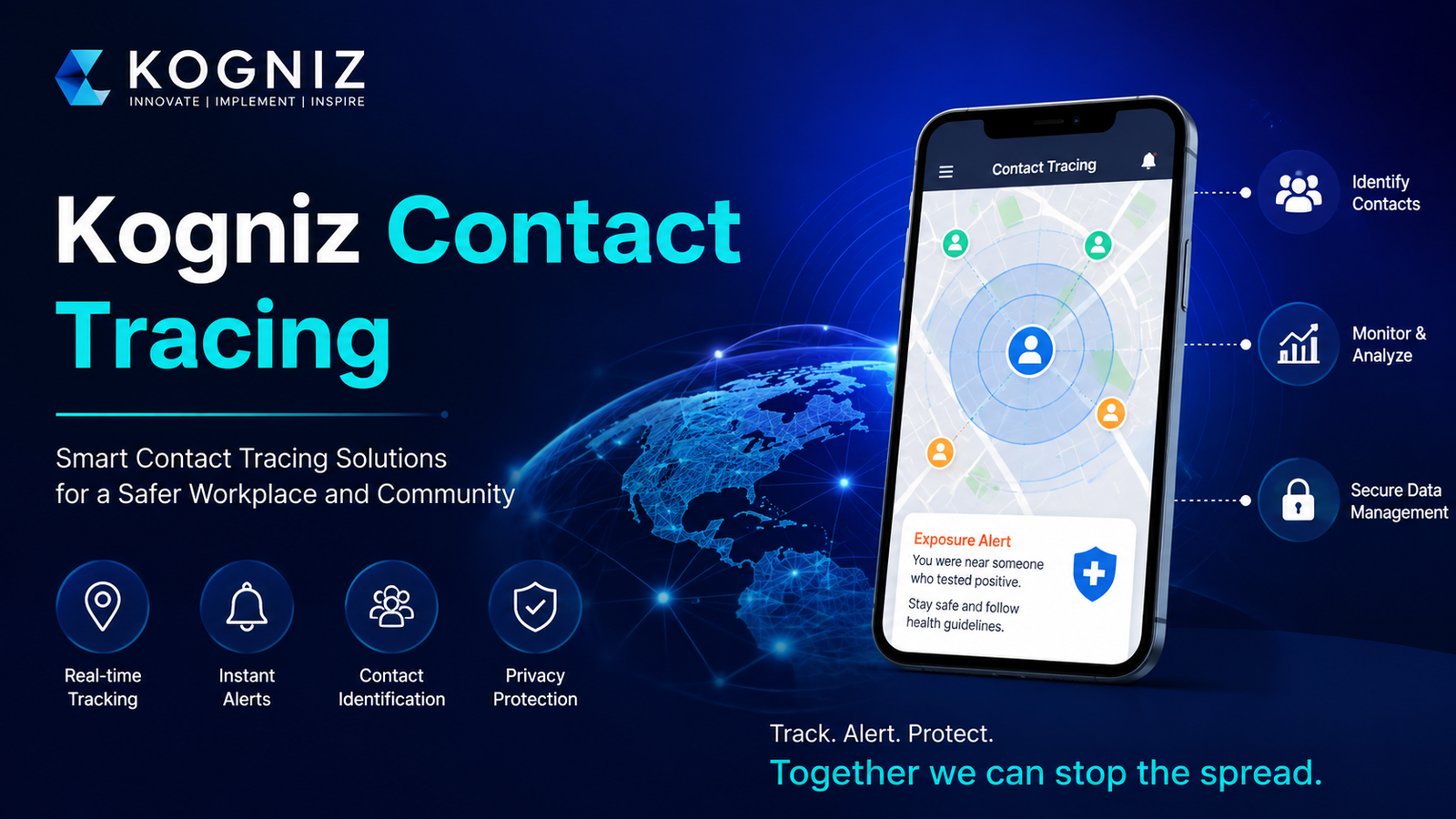
Workplace safety has changed a great deal in recent years, especially when it comes to managing the spread of infectious illness inside offices, factories, and other shared spaces. In the past, most organizations depended on manual interviews, sign-in sheets, and employee memory to figure out who had been near an infected person. This process was slow and often unreliable, since people naturally forget details about their day, especially in large facilities with constant movement. Kogniz Contact Tracing was developed to solve this problem by combining artificial intelligence with existing security camera systems, allowing organizations to automatically reconstruct proximity events instead of relying on guesswork. This article explains what Kogniz Contact Tracing is, how it works, the technology that powers it, its key features, and what organizations should understand before using it.
What Kogniz Contact Tracing Is
Kogniz Contact Tracing is a feature within the larger Kogniz AI safety platform, built specifically to identify individuals who may have come into close contact with someone who later reports a confirmed infectious illness. Instead of asking an employee to recall every conversation or hallway they passed through during a shift, the system reviews footage from cameras already installed in the building to determine who was nearby, for how long, and in which locations.
This tool grew out of the broader demand for automated health and safety technology that intensified during the COVID-19 pandemic, when businesses needed fast and dependable ways to manage exposure risk while continuing daily operations. Kogniz, a computer vision and artificial intelligence company based in California, built this feature as part of a wider suite of workplace safety tools, recognizing that most organizations already had security camera infrastructure that could be repurposed for health monitoring rather than requiring a completely new setup.
How the Contact Tracing Process Works
The process typically starts when an employee or an authorized administrator reports a confirmed case of an infectious illness within the organization. Once that individual is identified inside the system, the AI reviews recorded video footage from the relevant time period, focusing on that person specifically and anyone who appeared within a defined distance and duration. These thresholds can usually be adjusted to match current public health guidance, giving organizations flexibility as recommendations change over time.
After the footage has been analyzed, the platform generates a report listing the potential close contacts, including details such as the location and approximate length of exposure. This automated approach removes much of the uncertainty found in traditional contact tracing, where an infected person might forget a short meeting or fail to mention a shared break room visit. Because the system works directly from recorded video instead of self-reported memory, it tends to produce a more complete and objective record of workplace movement.
The Technology That Powers the Platform
At its foundation, Kogniz relies on computer vision, a branch of artificial intelligence that allows software to interpret visual information from cameras much like a human eye would, but at a far larger scale and speed. This technology enables the platform to track individuals across multiple camera feeds at once, estimate physical distances between people, and flag interactions that meet specific proximity criteria without requiring someone to manually review hours of recorded footage.
Because the platform is designed to work with existing IP camera networks, most organizations do not need to install new hardware to use the contact tracing feature. This compatibility with legacy security systems is one of the more practical aspects of the technology, since replacing an entire camera network solely for health monitoring would be expensive and time-consuming. Instead, the same cameras already used for building security become dual-purpose tools, supporting both safety monitoring and health-related contact tracing at the same time.
Additional Safety Features Built Into the System
Contact tracing is one of the more well-known capabilities of the Kogniz platform, but it works alongside several related features that together form a broader health and safety response system. Temperature screening allows the platform to check body temperature for groups of people entering a facility without requiring physical contact, while mask detection identifies whether individuals are following facial covering guidelines in real time.
Social distancing enforcement uses the same camera-based proximity tracking technology to alert administrators when too many people gather in a confined space, helping maintain safe occupancy levels. Vaccine and testing status management has also been built into the platform for organizations that need to track compliance with internal or regulatory health protocols. These features are designed to function as one connected system rather than standalone tools, giving safety teams a fuller and more coordinated view of exposure risk throughout a facility.
Why Organizations Choose Automated Contact Tracing
Manual contact tracing places a heavy burden on human resources and safety teams, particularly in larger organizations where hundreds or thousands of employees pass through shared spaces every day. Interviewing each potentially exposed individual, cross-referencing work schedules, and manually reviewing security footage can take hours or even days, which delays the overall response to a potential outbreak. Automated systems like Kogniz are designed to shorten that timeline considerably, helping safety teams identify and notify affected individuals much faster than manual methods would allow.
Speed plays a critical role in managing infectious disease risk, since any delay in identifying exposed individuals gives the illness more opportunity to spread before isolation or testing measures are put in place. By reducing the time between a reported case and a completed list of contacts, organizations can respond more decisively, whether that means recommending testing, adjusting work arrangements temporarily, or scheduling targeted cleaning of specific high-traffic areas.
Industries That Rely on This Type of Technology
Kogniz has found practical use across several industries where large numbers of people regularly share physical space. Manufacturing plants and distribution centers, where workers frequently move through shared equipment areas and break rooms, represent one common application. Retail businesses, educational institutions, and public sector organizations, including certain state and municipal government offices, have also adopted similar AI-driven safety systems to manage both pandemic-related concerns and broader occupational safety needs.
Large event venues and convention centers offer another practical example, since these spaces often host sizable temporary gatherings where manual contact tracing would be especially difficult to manage. In these environments, the ability to quickly reconstruct proximity data from existing camera footage provides a meaningful advantage over relying on guest lists or manual sign-in records alone.
Privacy and Responsible Implementation
Any system that uses camera footage and artificial intelligence to track individual movement naturally raises questions about privacy and responsible data handling. Organizations considering this kind of technology need to think carefully about how long footage and contact tracing data are stored, who is allowed to access that information, and what protections are in place to prevent misuse. Clear communication with employees about what the system does and does not track plays an important role in building trust when introducing this kind of monitoring into a workplace.
It is also worth understanding that contact tracing features like this are generally designed to activate only after a case is reported, rather than continuously recording detailed movement profiles of every employee at all times. Reviewing exactly how a specific deployment is configured, including data retention timelines and access controls, is an important step for any organization evaluating the technology, both to remain compliant with relevant regulations and to maintain employee confidence in how the system is used.
Limitations to Keep in Mind
While AI-powered contact tracing offers clear advantages in speed and consistency compared to manual methods, it is not without its limitations. Gaps in camera coverage, poor lighting, or overcrowded spaces can all affect the accuracy of proximity detection, meaning the system may occasionally miss certain interactions or misjudge distances under imperfect conditions. It is best viewed as a strong supporting tool rather than a complete replacement for basic health protocols and everyday safety practices.
There is also the broader question of long-term relevance beyond acute outbreak conditions. While contact tracing received significant attention during the COVID-19 pandemic, its ongoing usefulness depends on an organization’s specific risk factors, industry requirements, and whether infectious disease management remains part of its overall safety strategy. For workplaces less focused on pandemic-related concerns, other features on the platform, such as PPE compliance monitoring or general incident detection, may offer more consistent day-to-day value than contact tracing specifically.
Conclusion
Kogniz Contact Tracing demonstrates how artificial intelligence and existing security infrastructure can be combined to address a genuinely difficult operational challenge. By automating the process of identifying potential exposure events, the platform helps organizations respond faster and more accurately than traditional manual methods typically allow, particularly within large facilities where tracking movement by hand would be impractical or unreliable.
At the same time, adopting a system like this requires careful attention to privacy, responsible data governance, and realistic expectations about what the technology can and cannot do. Organizations that take the time to understand how the system is configured, communicate openly with employees, and treat it as one part of a broader safety strategy rather than a complete solution are likely to see the most benefit from it. As workplace safety technology continues to develop, tools like Kogniz show how computer vision and artificial intelligence can support healthier, better-protected environments without requiring organizations to replace the security systems they already rely on.
