

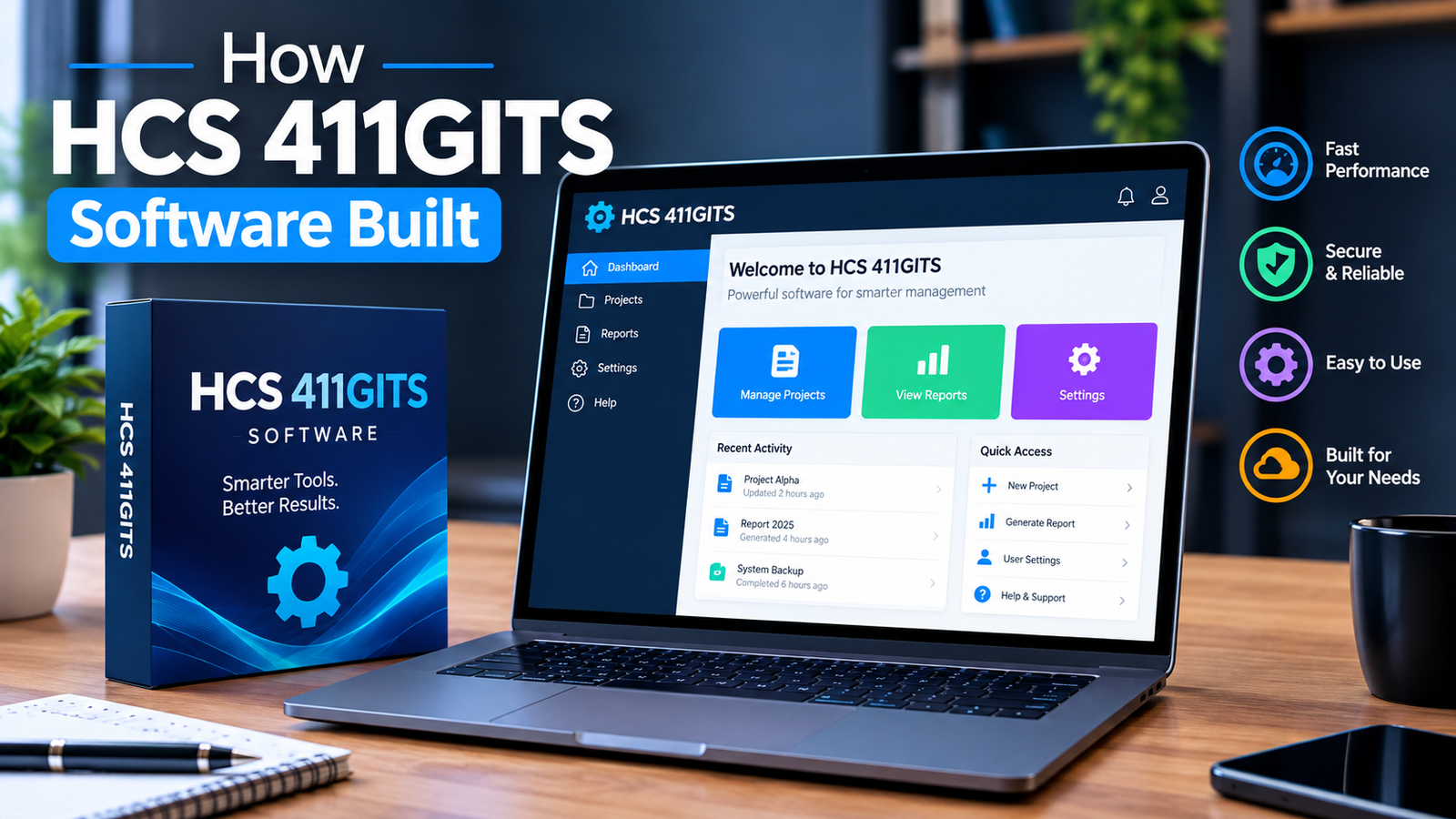
Software names with long codes often raise questions. HCS 411GITS is one of them. Readers keep searching for how HCS 411GITS software buil, hoping for a clear answer about its design, its security, and who stands behind it.
This guide explains how the software is generally described online, what the typical build process behind a system like this looks like, and where the facts stop. It also gives practical advice for judging any software before you rely on it. One honest note first: public information about this name is thin and inconsistent, so much of what follows describes common engineering practice and not confirmed details.
What Is HCS 411GITS?
The name is used loosely. It is usually described as a software system, or even a software concept, meant to manage complex operations, process data, run workflows, monitor activity, and support decisions. That description is broad enough to fit almost any business platform, which is part of the problem.
Other pages treat it as a finished product with a clear history. Related searches such as “HCS 411GITS software,” “software HCS 411GITS updated,” and “HCS 411GITS architecture” show that readers expect a specific tool. As far as I know, there is no clearly identified official website, named company, public manual, or set of independent user reviews, so it is wise to treat the name as unverified until the vendor is clearly identified.
Why Public Information Is Inconsistent
When a technical keyword becomes popular, many websites write about it even if they cannot confirm the facts. Several articles on this topic repeat similar phrases about structure, security, and scalability without showing screenshots, version numbers, or named engineers. Some of them openly admit that public information is mixed and that parts of their explanation are inferred.
That honesty is useful, because it tells readers not to assume every detail is settled. In practice, much of what is written describes how software like this is normally built, not how this particular product was built. Keep that distinction in mind while reading the sections below, and treat general statements as a guide to good questions rather than as proof.
How HCS 411GITS Software Buil Starts With Requirements
Whatever the exact product, serious software begins with planning. Before any code is written, a team clarifies who will use the system, what problems it should solve, and what limits exist on budget, time, and security. This stage sounds dull, but it shapes everything that follows.
Good requirements are written in plain language and agreed with the people who will actually use the software. Teams often interview users, review old processes, and sketch simple screens before building anything. Skipping this step is a common reason projects run late or miss their goals, because changing a design on paper is far cheaper than changing finished code.
Agile Development and Team Workflow
After planning, the work moves into development. Many modern teams use an Agile approach, which means building in short cycles, often called sprints, and reviewing working results every couple of weeks instead of waiting until the end of the project. Descriptions of HCS 411GITS commonly say it follows this style.
The approach helps because feedback arrives early. A team can show a small feature, hear what users think, and adjust the next sprint. Version control, code reviews, and clear task tracking support the process by keeping everyone working on the same, up-to-date copy of the project. These habits are standard across the industry, so the claim is believable even though it is not confirmed for this product.
Modular and Layered Architecture
Architecture gets the most attention in these descriptions. The software is often said to be modular and layered, which means it is split into separate parts that each do one job, such as user accounts, data storage, reports, and alerts. Layers keep the screen a person sees apart from the business rules and the database underneath.
The benefit is practical. One piece can be fixed or upgraded without breaking everything else, and new features can be added without rebuilding the whole system. Modular design also helps a system grow, since busy parts can be given more computing power while quiet parts stay small. This is a sound way to build software, and many reliable platforms rely on it.
Security Built Into the Design
Security is a frequent claim. Descriptions say it is part of the design from the beginning and not something added at the end. That is the right idea, because fixing security problems late is expensive and often incomplete.
In real projects, built-in security usually means planning who can see which data, encrypting sensitive information, logging important actions, and testing for common weaknesses before release. These are widely accepted practices, but a claim on a blog is not proof. If you plan to store private or business data in any system, ask for security documentation, independent audit reports, and a clear explanation of how data is backed up and protected.
Testing, CI/CD, and Controlled Rollouts
Quality checks are another recurring theme. Descriptions say that features pass structured testing before release and that code moves through a continuous integration and continuous deployment pipeline. A pipeline like this automatically builds the software, runs tests, and prepares it for release, which reduces human error.
Updates are also said to roll out gradually. Releasing a change to a small group first lets a team catch problems before everyone is affected. After release, monitoring tools watch speed, errors, and usage so that slowdowns can be fixed quickly. Monitoring is a sensible habit, since many problems appear only under real-world use and not in a test environment.
Updates, Maintenance, and What Is Confirmed
Some pages talk about newer versions with improvements to performance, testing, and scalability. Those pages often admit that some details are not fully confirmed. That caution matters, because release notes, version numbers, and change logs are exactly what real software vendors normally publish.
Long-term upkeep matters too. Maintainable software uses clear code, written documentation, and regular fixes for bugs and security issues. If you are considering this system, look for a dated release history, a support contact, and written documentation. When a vendor cannot answer simple questions about what changed and when, treat update claims as marketing and not as fact.
How to Judge Any Software Before You Rely on It
A few habits protect you. First, identify the maker: a real product has a named company, a business address, and a way to reach a human. Second, ask for proof of the claims you care about, such as security audits, uptime records, and customer references. Third, test with non-sensitive data before moving anything important.
Be especially careful with pages that repeat the same technical phrases without screenshots, version numbers, or names. A strong description gives specific details that can be checked, not only general statements about being modular, secure, and scalable. When the stakes are high, such as handling customer records or money, involve an IT professional and read the contract and privacy terms closely.
Conclusion
How HCS 411GITS software buil is a question with a general answer and a limited factual one. The software is described as being created through a structured process: clear requirements, Agile development, modular architecture, built-in security, layered testing, and automated deployment. Those practices match how reliable software is generally built, and they make the description sound plausible.
At the same time, the product itself is not clearly identified, public information is inconsistent, and many articles rely on inference. The wisest approach is to treat the claims as a list of good questions rather than proof, verify the vendor, and test carefully before trusting the software with anything important.
