

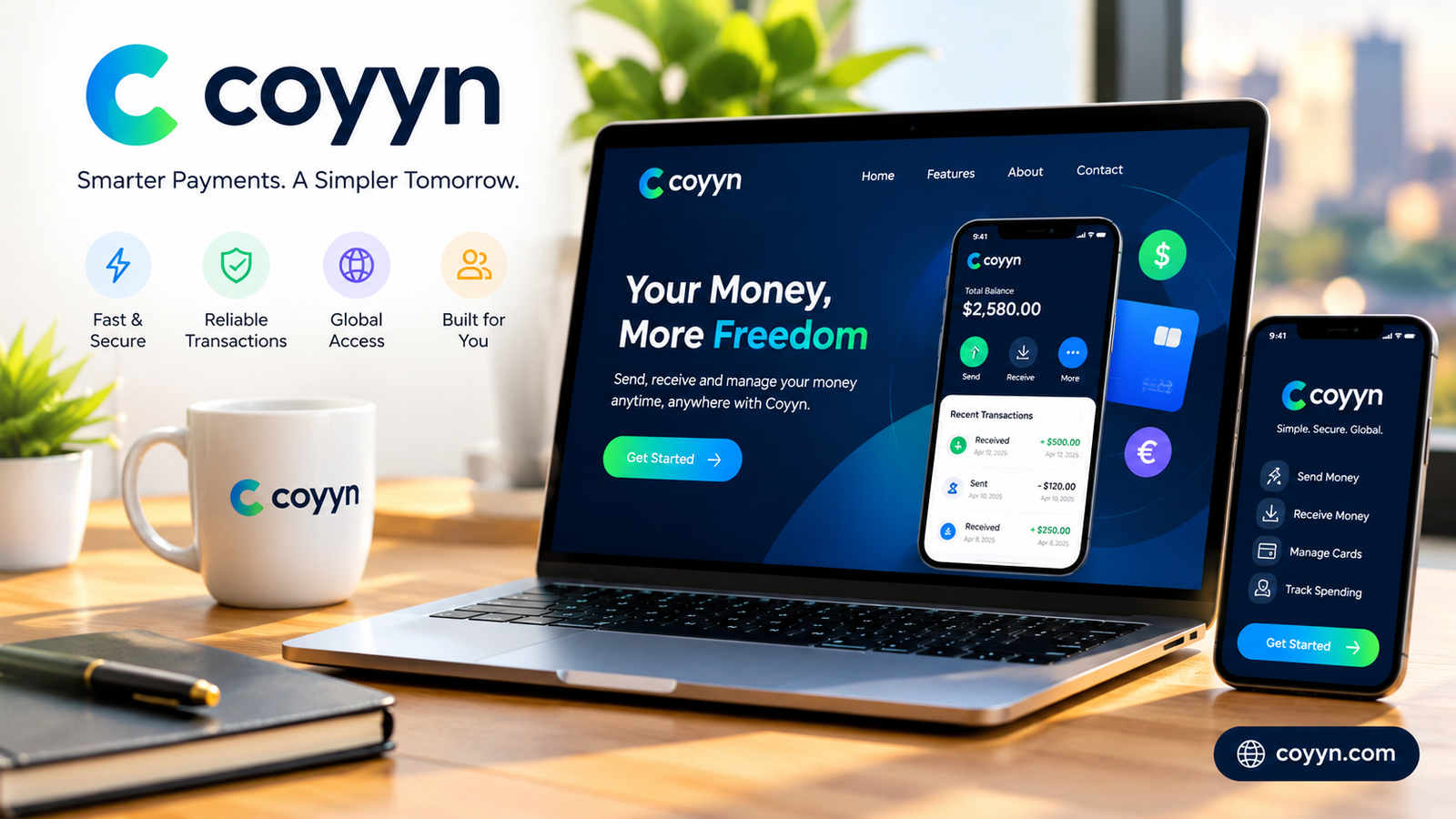
The economy is changing faster than ever. Banking happens on smartphones, cryptocurrencies have moved into the mainstream, and more and more people earn their living as freelancers or through digital platforms. Anyone who wants to keep up with these changes needs clear, well-explained information.
This is where Coyyn.com comes in. The online magazine covers digital capital, digital finance, cryptocurrency, investments, business growth and the gig economy. In this article, you will learn which topics the site covers, what background knowledge goes with them, and how you can use the content wisely.
What Coyyn.com Is and What It Is Not
Coyyn.com is an information magazine, not a trading platform. You cannot buy coins, open an account or invest money there. Instead, readers find guides, analyses and trend articles that explain complex finance and business topics in an understandable way. This difference matters, because many texts online confuse the name with exchanges or banking services.
The content is organized into sections such as Business, Banking, Capital, Economy and Money. Each area has beginner pages that explain the basic terms, along with current articles on new developments. This lets both newcomers and experienced readers jump in where they like. The site sees itself as a source of orientation, not as a financial advisor.
Digital Capital: A Concept in Transition
Digital capital describes assets that exist in digital form and have economic value. This includes cryptocurrencies, tokenized assets and digital payment methods, but also data, software and online reach. In the past, capital meant mostly machines, property and cash. Today, a large share of value is created in data centers, apps and networks.
For individuals, this brings new opportunities and new responsibilities. Anyone who holds digital assets needs to understand safe storage, password protection and two-factor authentication. With some digital assets, a lost login can mean a total loss, because there is often no bank that can reset a password. Good introductory articles help readers spot these risks early.
Digital Banking and Fintech in Everyday Life
Digital banking has made the trip to the branch unnecessary for many people. Instant transfers, phone payments and accounts managed entirely in an app are now standard. Neobanks and fintech companies have driven this change and are pushing traditional banks to modernize their services as well.
When choosing a banking app, do not look only at design and features. It is more important to ask whether the provider holds a banking license, how deposit protection works and what fees apply. In the European Union, deposits at licensed banks are protected up to 100,000 euros per customer, and in the United States, FDIC insurance covers up to 250,000 dollars per depositor at insured banks. Details like these decide how safe your money really is.
Cryptocurrency and Blockchain Explained Simply
The story of cryptocurrency began in 2008 with the Bitcoin whitepaper, published under the pseudonym Satoshi Nakamoto. The Bitcoin network went live in January 2009. Since then, thousands of other digital currencies have appeared. The foundation is the blockchain, a shared database in which transactions are stored in linked blocks that are very hard to change afterward.
Cryptocurrencies are known for sharp price swings. For this reason, stablecoins have become more important. They are tied to stable assets such as the US dollar or the euro and often serve as a bridge between traditional money and the crypto world. Beginners should know that stablecoins carry risks too, for example when the issuer is not transparent about its reserves. The best way to start is with small amounts and a clear understanding of how the technology works.
Regulation: Why Rules for Digital Markets Matter
As digital markets grow, so does the need for clear rules. In the European Union, the MiCA regulation creates a common framework for crypto-assets and their providers. Among other things, it sets requirements for transparency, authorization and the handling of stablecoins. For investors, this means more protection, even though risks do not disappear.
Taxes are another area where crypto investors should stay informed. In many countries, gains from selling cryptocurrency are taxable, and rules differ depending on the country and how long you held the asset. Anyone who trades often or earns income from staking should keep clean records of every transaction. A tax professional can help with complex cases and prevent mistakes with the tax authorities.
Investments, Venture Capital and Digital Assets
Besides stocks and funds, there are many other ways to invest today. Venture capital funds young companies with high growth potential, while private equity covers stakes in companies that are not listed on a stock exchange. These markets were long reserved for large investors but are increasingly open to private individuals through funds and platforms.
A simple rule applies here: the higher the possible return, the greater the risk. Stakes are often locked in for years and can lose all their value in the worst case. Broad diversification, a realistic time horizon and investing only money you can afford to lose are among the most important principles. NFTs and other digital collectibles are also speculative and should not form the core of a retirement plan.
The Gig Economy and Freelancing as a New Way to Work
In the gig economy, people work project by project instead of in a traditional job. Typical examples are designers, writers, developers and consultants, as well as drivers and couriers who get jobs through platforms. The appeal is flexibility: you can often choose when and where you work, and a side income is possible with very little start-up money.
That freedom comes at a price. Self-employed people must organize health insurance, retirement savings and taxes on their own, and income often changes from month to month. One issue that is often underestimated is insurance coverage for accidents while working for an app. Drivers should check carefully whether the platform, a liability policy or their own insurance applies after an accident. The European Union has also adopted a directive on platform work that aims to limit false self-employment.
The Sharing Economy, the Data Economy and Digital Identity
The sharing economy is based on the idea of sharing things instead of owning them. Cars, apartments, bikes and tools are offered through digital platforms, which saves resources and often money. This model depends on trust between strangers, and that trust is built through rating systems and verifiable profiles.
Closely related is the data economy, in which information itself becomes a valuable resource. Companies use data to improve their offers, assess risks and develop new business models. This also raises the importance of secure digital identities. In Europe, work is underway on a digital identity wallet that will let citizens prove who they are online and share documents without giving away more personal data than necessary.
Conclusion: Knowledge as the Basis for Good Decisions
Coyyn.com offers a broad and well-organized entry point to the most important topics in the digital economy. From banking and cryptocurrency to investments, the gig economy and digital identity, readers find clear explanations and current insights. The site does not replace professional advice, but it gives you a solid base for asking the right questions.
If you use the content, treat it as a starting point for your own research. Check important claims with official sources such as financial regulators and government agencies, compare providers carefully, and get expert advice before making larger decisions. That way, information becomes real knowledge, and knowledge becomes a sound decision in an economy that never stops evolving.
