

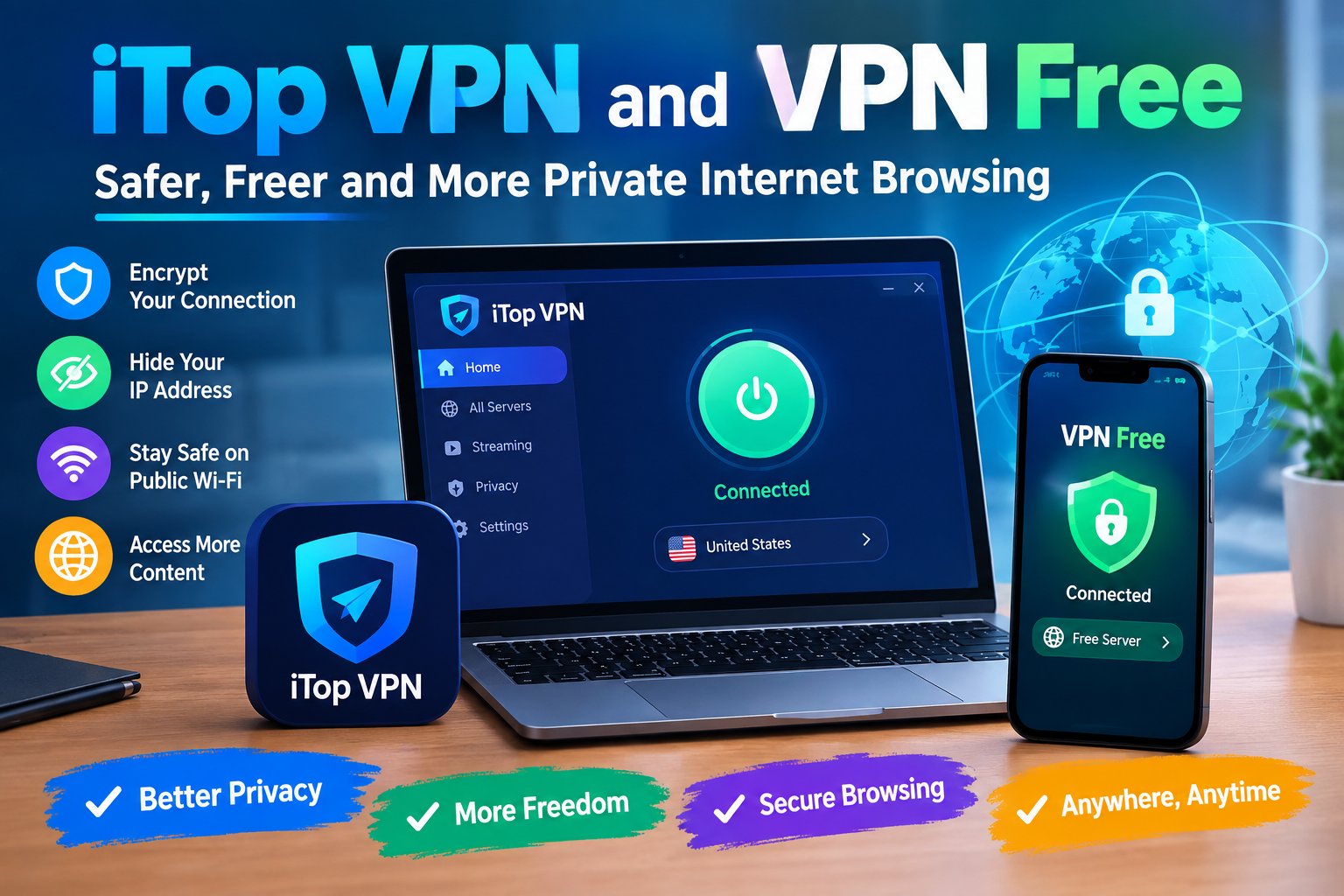
Internet privacy has become an important concern for people who use public Wi-Fi, browse websites frequently, stream content, or work online. Every time someone connects to the internet, information about the connection can potentially be exposed. A virtual private network secures your online connection by rerouting all internet data through an encrypted and protected remote server, effectively shielding your browsing activity from external exposure.
Among the tools available for this purpose iTop VPN is designed to provide users with a straightforward way to establish a VPN connection. At the same time, people searching for VPN free solutions often want basic privacy features without committing to a paid subscription. Understanding how these services work can help users choose an option that fits their needs.
What Is a VPN?
Virtual private networks establish a highly secure data tunnel to connect user devices with distant server endpoints. Instead of sending traffic directly from the device to the destination website, the connection is routed through the VPN server.
This can provide several practical benefits. For example, when using public Wi-Fi at an airport, hotel, café, or other location, a VPN can add an additional layer of protection to internet traffic. It can also prevent websites from seeing the user’s normal IP address because the destination may see the IP address associated with the VPN server instead.
However, a VPN is not a complete internet-security solution. Users still need strong passwords, updated software, reliable antivirus protection, and safe browsing habits.
What Is iTop VPN?
iTop VPN is a VPN service designed for users who want to establish a more private internet connection without complicated configuration. Its interface is aimed at making the process accessible to beginners as well as people who already understand VPN technology.
After installing a VPN application, users can generally select a server location and establish a connection. Once connected, internet traffic is routed through that VPN server according to the service’s technical configuration.
The usefulness of a VPN can depend on several factors, including server availability, connection speed, network distance, device compatibility, and the user’s location. For everyday browsing, a convenient interface and stable connection can be particularly important.
Why Do People Search for VPN Free Options?
The phrase VPN free is commonly used by people looking for VPN services that do not require an immediate subscription payment. Free VPN options can be useful for users who only need occasional VPN access or want to test how a VPN works before paying for additional features.
However, free services may have limitations. These can include fewer server locations, restricted bandwidth, slower speeds, limited simultaneous connections, or fewer advanced features.
Users should also pay attention to the provider’s privacy policy and business model. A free service still needs resources to operate, so it is important to understand what information is collected, how it is handled, and whether the service includes advertising or other restrictions.
iTop VPN vs. Free VPN Services
The choice between iTop VPN and another VPN free service depends largely on what the user expects from a VPN.
A free VPN may be sufficient for occasional browsing or simple testing. Someone who needs more consistent performance, additional server choices, or extra features may prefer a paid VPN plan.
Another consideration is ease of use. Beginners may prefer a service with a simple interface that makes connecting and disconnecting straightforward. More experienced users may be interested in additional configuration options.
Before selecting a VPN, users should compare the available features rather than choosing solely because a service is free.
Benefits of Using a VPN
A VPN can be useful in several everyday situations.
Public Wi-Fi Protection
Public networks can create additional security concerns because users may not know who operates the network or how securely it is configured. VPN technology encrypts data transmission between your local device and the remote server to secure your online connection.
Greater Privacy
A VPN can hide a user’s regular IP address from websites and online services that receive the VPN connection. This can provide an additional degree of privacy while browsing.
Secure Remote Work
People who work remotely may use VPN technology to create a protected connection when accessing work-related resources. Businesses often use specialized VPN systems for secure employee access.
Flexible Server Locations
Depending on the provider and subscription, users may be able to connect through servers in different regions. This can be useful for travelers who want to maintain a consistent VPN connection while moving between networks.
Things to Consider Before Choosing a VPN
Choosing a VPN requires more than checking whether the service is free. Users should examine several factors.
Privacy policy: Read the provider’s privacy documentation to understand what information may be collected.
Connection speed: Encryption and server distance can affect performance, so speed may vary depending on the selected server.
Server network: More server locations can provide greater flexibility, although a large server list does not automatically mean better performance.
Device support: Check whether the VPN supports the operating systems and devices you regularly use.
Data limits: Some free plans impose monthly or daily data restrictions.
Customer support: Paid services may offer additional support options that are not available with free plans.
Is a Free VPN Enough?
For occasional use, a reputable free VPN may provide enough functionality. For example, someone who wants to experiment with VPN technology or occasionally use a VPN on an unfamiliar network may not require an extensive feature set.
On the other hand, users who rely on a VPN regularly may want to consider a paid plan. Paid services can provide additional features and fewer restrictions, depending on the provider and subscription package.
The most important factor is to select a trustworthy provider and understand its limitations before using the service for sensitive activities.
Tips for Safer VPN Use
A VPN is only one component within a comprehensive online security plan. Keep your operating system and applications updated, use unique passwords, enable multi-factor authentication where possible, and avoid downloading files from suspicious websites.
It is also wise to verify that the VPN application has been downloaded from a legitimate source. Fake VPN applications can create serious privacy and security problems.
Finally, remember that a VPN does not make a user completely anonymous online. Websites can still collect information through accounts, cookies, browser fingerprints, and other technologies.
Final Thoughts
Both iTop VPN and other VPN free options can help users understand and improve the privacy of their internet connections. A VPN can encrypt the connection between a device and its VPN server, hide the user’s regular IP address from many destinations, and provide an additional layer of protection when using unfamiliar networks.
Free VPN services can be attractive because they reduce the cost of trying VPN technology, but they may include limitations. Users who need more consistent performance or additional functionality should compare available plans carefully.
Ultimately, the best approach is to look beyond the word “free” and evaluate privacy practices, performance, server availability, device support, and overall reliability. With the right expectations and good security habits, a VPN can be a useful tool for everyday internet privacy.
