

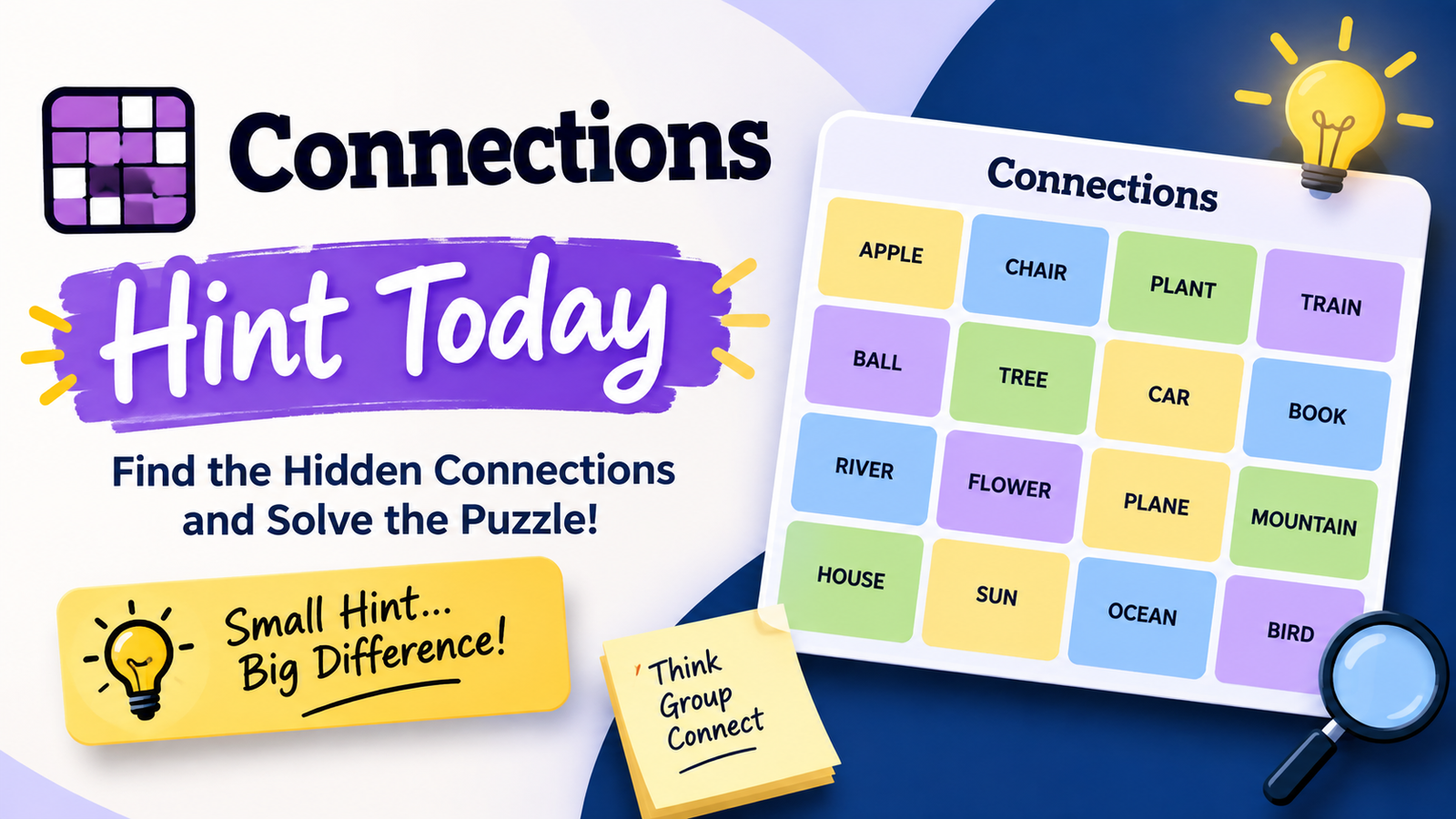
Every day, thousands of people open the New York Times Connections game, look at sixteen words scattered across a grid, and try to figure out how they fit together. It looks simple at first glance, but anyone who has played more than a few rounds knows how easily a puzzle can turn confusing. This is exactly why so many players search for a connections hint before locking in a guess. A good hint does not simply hand over the answer. Instead, it points your thinking in the right direction while still letting you experience the satisfaction of solving the puzzle yourself. This article walks through what Connections is, how hints are structured, common mistakes players make, and practical strategies to solve the game more confidently every day.
What Is the NYT Connections Game
Connections is a daily word puzzle published by the New York Times, and it shares a lot in common with the classic game Categories that many people grew up playing. Instead of coming up with words that start with a certain letter, players are given a grid of sixteen words and must sort them into four groups of four, where each group shares a hidden connection. The tricky part is that many words appear to fit into more than one possible group, which is exactly the kind of misdirection the puzzle is designed around.
Each group in the game is assigned a difficulty level represented by a color. Yellow is usually the most straightforward category, green is a little more layered, blue often requires more lateral thinking, and purple is typically the hardest, frequently built around wordplay, hidden phrases, or unusual associations. Players are allowed up to four incorrect guesses before the game ends, which leaves a small margin for error but not much room to waste. This structure is exactly why a well-placed connections hint can make such a big difference, especially on days when the puzzle feels unusually tricky.
The game refreshes once a day, and because it releases at midnight based on your time zone, some players are technically working on a different day’s puzzle than others at any given moment. This daily rhythm is part of what keeps people coming back, similar to how Wordle built a loyal daily audience through habit and light competition with friends.
Why People Search for a Connections Hint
One of the biggest reasons people look for a connections hint is the desire to protect a daily streak. Much like Wordle, Connections has become a habit for many players, and missing a day or making too many mistakes can feel surprisingly disappointing, especially for those who have kept a streak going for weeks or months. A hint offers a safety net that helps players avoid an unnecessary loss without completely giving up on solving the puzzle themselves.
Another common reason people search for hints is that certain categories rely on knowledge that is not universal, such as pop culture references, regional idioms, or wordplay that may not be obvious to everyone. A hint can help close that gap without spoiling the entire challenge. Rather than guessing at random and risking a mistake, a hint gives players just enough direction to reconsider the words in front of them with fresh eyes.
Some players also use hints purely as a learning tool rather than out of necessity. By seeing how a hint connects to the final answer, they begin to understand the type of thinking the puzzle rewards, which helps them get better at solving future puzzles without needing as much outside help over time.
How Connections Hints Typically Work
Most sites and tools that offer a connections hint use a layered approach instead of revealing everything at once. The first layer usually gives a general theme for each color group, offering a broad idea of what the category might involve without naming any of the actual words. This lets players return to the puzzle with a new angle and attempt the group on their own first.
If that is not enough, the next layer often reveals the category name itself while still keeping the four specific words hidden. This is frequently enough for many players to complete the rest of the group, especially once they understand what they are looking for. For those who remain stuck, some tools allow revealing one word at a time, giving just enough of a foothold into a group without giving away the entire set at once. This staged structure mirrors the way a good teacher offers help, starting subtle and only becoming more direct when truly needed.
Reading Between the Lines of Each Color
Learning to use hints effectively also means understanding the tendencies of each color group. Yellow hints tend to be the most literal, usually pointing directly at a shared category such as a type of object, a simple theme, or an obvious shared trait among the words. Green hints are often only slightly more layered, sometimes pointing at a shared action or common use rather than a plain, direct category.
Blue hints usually require a bit more imagination, since blue groups often rely on less obvious relationships, such as shared associations rather than straightforward definitions. Purple hints, meanwhile, are often intentionally vague, because purple categories frequently depend on wordplay, such as words that can all precede or follow another specific word, or short phrases hidden inside terms that seem unrelated at first. Understanding this pattern helps players interpret hints more accurately instead of taking every hint at face value.
Common Mistakes Players Make Without Hints
One of the most frequent mistakes in Connections is tunnel vision, where a player assumes that all four words in a suspected group share an obvious theme, such as animals or colors, without considering less literal or more creative connections. This often leads to forcing words together that only appear to match on the surface, which can waste a guess unnecessarily. A connections hint can help interrupt this kind of narrow thinking by pointing toward a completely different angle.
Another common issue is being too literal with words that carry multiple meanings. Short, everyday words like head, cold, gold, or paper often hide inside idioms or compound phrases, which makes them common traps in blue and purple categories especially. Many players also make the mistake of tackling categories out of order, spending early guesses on complex purple-level connections before working through the easier, more obvious groups first, which increases the risk of running out of guesses too soon.
How to Use Hints Without Ruining the Fun
The best way to use a connections hint is to treat it as a gentle nudge rather than a full answer key. Reading only the broad theme hints first allows you to return to the puzzle with fresh eyes and often leads to solving the group entirely on your own. This keeps the feeling of accomplishment intact while still helping you avoid an unnecessary mistake that could end your streak.
It also helps to pace your use of hints the same way you would pace your guesses. Instead of revealing every hint at once, try solving the easier yellow and green groups completely unaided, and save hints for the more challenging blue and purple categories where wordplay is more likely to cause confusion. This approach mirrors how experienced puzzle solvers naturally play, reserving outside help for the parts of the puzzle that genuinely require it.
Strategies That Reduce the Need for Hints
Building a habit of jotting down possible groupings on paper, even partial ones with just two or three words, can significantly reduce how often you need outside hints. Writing things down forces you to slow your thinking and notice patterns that might not be obvious at first glance, especially when it comes to spotting hidden purple-level wordplay, which often depends on subtle patterns rather than clear, obvious themes.
Another effective strategy is solving in order of confidence rather than color. If you feel completely certain about a group, even if another set of words looks tempting, lock in that group first. This reduces the number of moving pieces you need to track and often clarifies the remaining categories through simple elimination. Over time, these habits reduce your dependence on hints because you naturally begin recognizing the puzzle’s recurring patterns and misdirection tactics.
The Value of Hints for New Players
For newer players, using a connections hint regularly is less of a shortcut and more of a learning tool. Seeing how a hint translates into a solved category helps beginners understand the logic the puzzle relies on, including how loosely related ideas or subtle wordplay can form a valid group. Over time, this exposure builds pattern recognition that makes future puzzles noticeably easier to solve independently.
Hints can also make the game more approachable for players who might otherwise get frustrated and give up entirely. Since Connections categories range from very simple to intentionally misleading, having a light support system in the early stages encourages consistent play, which is often how players improve the most. As familiarity grows, most players find they rely on hints less and less, saving them mainly for the toughest purple-level puzzles that even experienced solvers sometimes struggle with.
Conclusion
A connections hint works best when it is treated as a guide rather than a shortcut, offering just enough direction to keep the puzzle enjoyable while protecting your daily streak. Understanding how each color group tends to behave, recognizing common traps like hidden wordplay, and pacing your use of hints wisely can all make a meaningful difference in how consistently you solve the game. Whether you are a brand new player or someone chasing a long-running streak, the goal stays the same: use hints to sharpen your thinking rather than replace it, so that solving each day’s Connections puzzle remains just as satisfying every single time.
