

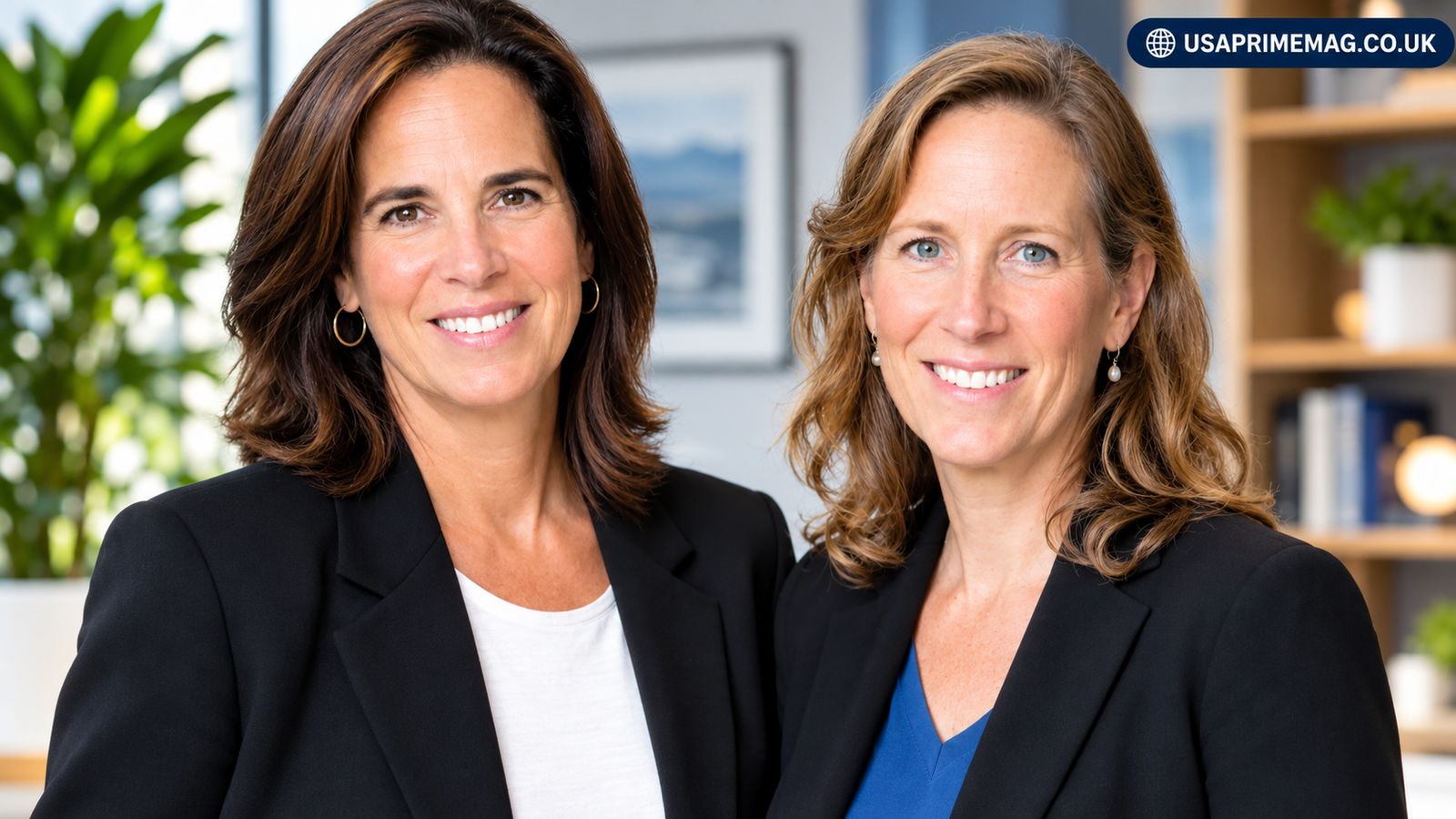
People often search for both names together, usually while reading about influential women in business and technology. As far as I know, the two did not run a company together, so this guide treats each career separately and sticks to widely reported facts. It is general information and not investment advice, and figures such as net worth change often, so check official sources for the latest numbers.
Why Maria Asuncion Aramburuzabala and Susan Wojcicki Appear Together
The pairing seems to come from lists and rankings of powerful women in business, where leaders from very different fields appear side by side. Readers who look up “most influential women,” “women billionaires,” or “women CEOs” meet both names and want to learn more. Related searches such as “María Asunción Aramburuzabala net worth,” “Susan Wojcicki YouTube,” “Tresalia Capital,” and “Susan Wojcicki legacy” show what people usually want to know.
One sad fact needs to be clear from the start. Susan Wojcicki passed away in August 2024 at the age of 56, after living with lung cancer. Any page that talks about her as a current executive is out of date. Aramburuzabala, by contrast, remains active in business, which is why the sections below use different tenses for each woman.
Who Is María Asunción Aramburuzabala?
Aramburuzabala is a Mexican businesswoman and one of the best-known investors in Latin America. Born in Mexico City in 1963, she is the chair of Tresalia Capital, an investment firm that began as a family office. Business media in Mexico regularly describe her as the richest woman in the country.
Her family background shaped her path. Her family was closely tied to Grupo Modelo, the brewery behind Corona, one of the best-known Mexican beers in the world. Growing up around such a famous brand gave her early exposure to business, though her later success depended on how she managed and grew the wealth that followed.
From Grupo Modelo to Tresalia Capital
The turning point came when the family’s brewing interests changed hands. Grupo Modelo was acquired by the global brewer AB InBev in a deal that was completed in the early 2010s, and Aramburuzabala was among the heirs who benefited. Instead of simply holding the proceeds, she focused on building a long-term investment platform.
Tresalia Capital was founded in the 1990s, and its name is often explained as a reference to three allies, meaning herself, her mother, and her sister. The company does not make consumer products or sell services to the public. Its job is to manage and diversify the family’s wealth, which explains why her name appears often in finance news but rarely on store shelves.
What Tresalia Invests In
Over the years, Tresalia grew into a broad investment group. It is commonly described as having three main areas of activity: asset management, private equity and venture capital, and real estate. Its investments reach across Latin America, the United States, and Europe, and its property division operates under the name Abilia.
The venture side has backed several well-known startups, including the used-car platform Kavak and other companies in technology, consumer goods, and biotechnology. Reports also describe her as a pioneering woman on major business boards in Mexico and as a participant in international advisory groups. Readers should check these roles against official records, since board seats and titles change over time.
Fortune, Family, and Succession
Her wealth is widely tracked by business magazines. Forbes and similar rankings place her fortune in the billions of dollars, though exact figures differ between lists and change with markets. Treat any single number as a snapshot, not a permanent fact, and check the date next to it.
Succession is also part of the story. Her children are reported to take part in the family business, and Mexican business coverage often discusses how a new generation may take on larger roles at Tresalia. Planning for the next generation is a challenge for every wealthy family, and how it is handled can shape a company’s future for decades.
Who Was Susan Wojcicki?
Susan Wojcicki was one of the most influential technology executives of her generation. Born in 1968 in Santa Clara, California, she served as CEO of YouTube from 2014 until she stepped down in early 2023. She grew up on the Stanford campus, surrounded by academics, which helped shape her curiosity about ideas and numbers.
She studied history and literature at Harvard, then earned a master’s degree in economics and an MBA. Her route into technology was not a straight line, since she had once considered an academic career. A chance connection to two young founders, and an unusual favor involving her family garage, soon changed the direction of her life.
Her Early Years at Google
A famous garage launched her career. In 1998, she rented her garage to Larry Page and Sergey Brin, and Google used it as its first office. She joined the company in 1999 as its first marketing manager and became one of its earliest employees.
She later moved into advertising, where she led the teams behind products such as AdWords and AdSense, and she supported Google’s purchase of DoubleClick. These tools helped turn search traffic into a huge business and made her one of the company’s most important leaders. Her work in those years shows how product vision and business strategy can grow together.
Leading YouTube and Her Legacy
Wojcicki is most often remembered for YouTube. She urged Google to buy the young video startup in 2006 and later took charge of it as CEO. Under her leadership, the platform grew into a daily habit for billions of people and a launchpad for new careers, from musicians to educators to gamers.
During her time, YouTube added more ways for creators to earn money, including memberships, live-stream tipping, and paid subscriptions, and it expanded into short-form video. Her tenure also involved difficult questions about harmful content, advertiser concerns, and regulation. Beyond business, she spoke often about encouraging girls to study technology, bringing more women into the industry, and supporting better parental leave policies. When she died, leaders across the technology world, including Google CEO Sundar Pichai, paid tribute to her influence.
Conclusion
Maria asuncion aramburuzabala and susan wojcicki followed very different roads. Aramburuzabala turned the proceeds of a famous family brewery into a diversified investment group with real estate, private equity, and venture holdings. Wojcicki helped build Google’s ad business, championed the YouTube purchase, and led the platform through its most important decade.
For readers, the useful lessons are clear. Long careers are built from steady decisions, strong teams, and the courage to back new ideas. When you research public figures, rely on official records and reputable news, remember that numbers like net worth change, and double-check recent claims before you share them.
